Thursday, February 13, 2014

wind in the willows

What a romp!

It's clear that kid's stories from the turn of last century are not like current kid's stories however; similar to children's lit like The Hobbit, the characters get into a scuffle here and there, and they aren't above a knock on the head with a cudgel or a pistol shot now and again.

In keeping with the Hobbit comparison, Mole, who is the first character we meet, is a quiet, homebody who takes it upon himself rather suddenly to quit his housecleaning and step outside for a little adventure, and by the end of the story, is a completely new animal. Mole goes through a transformation of character that is delightful to see.

Mole's life changes when he decides to take a walk--to see what there is to see--and finds himself at the river for the first time in his life. He soon meets Rat, the water rat, who lives along the river--the Thames as it turns out--and the two become fast friends, and then he also meets Otter, Badger, Toad, and a few others along the way.

What adventures they have together: boating, picnicking, traveling along the byways and highways in a gipsy caravan, stealing cars, jail breaking, fraud, assault, shooting at folks in the dark... Ah, good, clean fun for the kiddies!
 Proto-Teenage Mutant Ninja Turtles?
These fellas 'bout ta get busy!

Yes, jail breaking. And getting away with it. And living happily ever after. With no ramifications. And laughing about it. Yeaaah, don't bother reading to your kids, just get them a copy of Grand Theft Auto and a Saturday Night Special. They'll grow up strong.

I kid! This book was great! (Altho I probably wouldn't read it to the kids.)

The Wind in the Willows was written by Kenneth Grahame; first published in 1908. I read the Puffin Classics paperback edition, printed in 2008 with an introduction by Brian Jacques. There have been various movie and cartoon versions of this story by Disney and others.


Sunday, February 9, 2014

zen and mortorcycles

I've been hearing about this book since not long after it was written, its seems. My wife read this in her first year of college and she found a used copy for me somewhere and its been sitting around for another year or so waiting for me to read it. Zen and the Art of Motorcycle Maintenance is a great title for a book, and I'm sure its what helped it to top the charts when it came out, and lends it staying power after all these years. Its still in print, and I would guess that its still being taught in college classes today.

ZAMM is a complex book I've been reading it since december but fascinating nonetheless. Its three stories really, woven together. Outwardly, its the story of a cross country motorcycle trip of a father and his young son,* but along the way, the father narrates a modern take on Zen philosophy from his own personal experience, and how it ties into, and is tied up with western philosophy. His own personal experience is his history, and how working through a personal philosophy drove him mad. The narrator also peppers his monologues, and occasionally his conversations with others, with motorcycle maintenance tips, which aren't very useful or complete, if truth be told, but they aren't meant to be. The author uses maintenance of the bike as allegory for the self. When he says you can't just ride and ride the cycle until it breaks down and then call for help, you need to understand the cycle; be responsible for it, maintain it as you go along as a matter of course, he's talking about ourselves.

Allegory is the go-to tool in the entire book, because the motorcycle trip itself is an allegory of the narrator's trip through life, his slip into madness, and his recovery. It can also be seen as a description of his relationship with his son, as well as the struggle to explain the complex philosophy he is building for his readers along the way. By the end, its clear that narrator himself could use a road map, and may have indeed, done himself some good by working through this tortured time of his life; he's made himself an example for us, to show us what self examination and self-maintenance can do for us.

Very interesting, but slow and methodical. The narrator says at the outset that the process wasn't going to be either simple or quick, and it wasn't. For as fascinating as it was, this book was a slog. After taking all of January and a little of February to get through this one, I don't think I'll be matching my personal best of 49 books in 2013.

Robert Pirsig has written a follow up, but I don't think many read it. The edition of ZAMM I read is the 25th anniversary edition, which includes a new forward by the author, as well as an afterword he penned at the 10 year mark, along with a short interview with him. Its interesting to see how his views of the book evolved over time.


* Pirsig really did take a cross country trip on his bike with his son Chris, and their friends John and Sylvia. He talks about how he decided to use the trip as a structure to hang his story on, well after he began to write it. The link I put in there leads to one of a few photographs from that trip you can find on the net.

Saturday, January 11, 2014

pan

The word for the day, my dear friends, is embonpoint. Taken from this description of Tinker Bell:

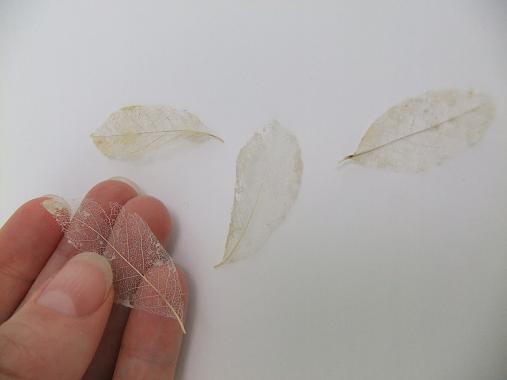
"It was not really a light; it made this light by flashing about so quickly, but when it came to rest for a second you saw it was a fairy, no longer than your hand, but still growing. It was a girl called Tinker Bell exquisitely gowned in a skeleton leaf, cut low and square, through which her figure could be seen to the best advantage. She was slightly inclined to embonpoint."

Embonpoint has a lovely meaning, and in my mind, is worth the price of admission. Tink is a sassy little fairy as we know and expect, and I think Disney gave it a go as much as they could in their cartoon, but Barrie describes Tinker Bell as dressed in 'skeletal leaves,' and, 'slightly inclined to embonpoint.'
Read: buxom and bosomy and with a see-through dress. va-va-voom

This is just one of many examples of the differences between Barrie's Peter Pan and the images given us by pop culture.

This soft-bound volume was put out by Borders Books as part of their Classics Series, printed in 2006. They call it the Expanded Edition, as it includes Peter and Wendy, Barrie's own 1911 novelization of his 1904 play, Peter Pan or the Boy Who Would Not Grown Up. Just prior to the novel, Barrie penned Peter Pan in Kensington Gardens, in 1906. This book also includes one further short story entitled The Blot on Peter Pan, but it isn't much about Pan at all. I think this funny little short story was written in 1926.

Kensington Gardens was fun to read, as it is essentially the Pan origin story. It doesn't tie up all the loose ends, but it does give a pretty complete picture of where Pan came from. There are other little short stories that Barrie wrote about Pan and some of the other characters in the stories, but just these three are included in this book.* It was fun, wild, and as one would expect, a little melancholy. I wonder if Tolkien and some others were inspired by Pan's sadness hidden beneath his joy. There are some distinct similarities between him and the elves of Middle Earth.

Read this book.


* 'Preface to The Coral Island' (1913); 'Captain Hook at Eton' (1927); and 'To the Five: A Dedication' (1928).


Monday, January 6, 2014

home to italy

Home to Italy is novel by Peter Pezzelli and seems to be targeted to the Italian population here in North America; those first and second generation folks who still dream of home. I'm not a second generation Italian, but I do have dreams of Italy. Just not the same ones as Peppi, the protagonist in this story.

Peppi is a first generation Italian who have lived in the US for most of his life, but still remembers his childhood in his family's mill in Abruzzo. In fact he comes from a small village near Sulmona, which is where my wife's family is from. The small village is called Villa San Giuseppe but I don't remember it, and I can't find it on a map so I think we can assume that Pezzelli created this town for the story. It makes sense because Peppi does go to Italy to his little town and they are running a confetti factory. I would have heard of a confetti factory.

Pezzelli hits on all of the points that make Italy a wonderful place: the food, the weather, the people, the food, the gardens, the love of life, the tight family bonds, the history, and the food. Pezzelli takes Peppi on a full circle trip through his life, and all of life's ups and downs, joys and sorrows are visited along the way. This is a feel-good, romantic look at life in Italy and what it is to go home again, presuming one ever can.

Its fun, sweet, poignant, and heartwarming. It was the perfect book to finish out 2013 with, and I just squeaked it in on the 31st. Peter Pezzelli has a hand full of other books listed in backmatter of this one. It looks like the Italian tradition, here in the Americas, is the general theme.

Happy New Year everyone! And thanks to Joe & Fran for the book loan!

Saturday, December 28, 2013

the key

The Key, by Simon Toyne is the SECOND book in a trilogy. Why have I virtually yelled the word 'second'? Why, because I didn't know that this was the second in a trilogy before I read it. Because the publisher, or the cover artist, or someone, didn't think it was necessary to tell me that, somewhere convenient--like on the cover, on the title page... somewhere.

I'm reading along thinking, this is interesting, there seems to be a lot of backstory here, I guess Simon'll get to it at some point.

He did.

In book one. here's me making the church lady face

ANYways, Toyne does a pretty good job in this one. It trucks right along and the characters are pretty good, although you can see how they'll fulfill their preordained-action-adventure rolls from the moment you meet them. Not that I'm finding fault, we read the same stories over and over and we love them. Joseph Campbell, I'm looking at you... well, I'm looking in your direction, sort of

As I mentioned earlier, there is a fair amount of reference to the earlier story, which I now know is called Sanctus, (the third is called The Tower). Based on the references and this book, Ill probably look for the others, but probably not tomorrow. Toyne has developed a dark and occultish past for the church, with links to paganism and mysticism, that stretches back to the beginnings of mankind. Dark little tendrils of this past are still visible and active the church today, and Toyne weaves a interesting story based on the secrecy surrounding some aspects of the church, such as its archives, that others like Dan Brown have done before. These are the kinds of things that make reasonable people say hmm, and helps to suspend disbelief enough to enjoy a story like this.

Here's a tangent: If the church is opposed to mysticism and mythology, why are there dragons, and other mythical and mystical beasts and icons decorating Saint Peters at the Vatican? And if one of the commandments states that there is only one god, why is Saint Peters just lousy with statutes of Athena and other gods and goddesses? I'm not finding fault, I'm only pointing out that there is probably more room for discussion than hardliners would have us believe.

Saturday, December 21, 2013

watership down

Was Watership Down one of those books folks had to read in middle school? I seem to recall hearing about this story when I was a kid, but maybe that's because of the cartoon they made based on the book. The book was originally published in 1972, and the movie came out in 1978 with the voice of John Hurt in the lead. Watership Down was pegged as the most violent PG-rated movie, ever. dude, the pictures are pretty grim The book and the movie are both English. The author, Richard Adams, won two prestigious children's book awards in England for the story: the Carnegie Medal and the Guardian Children's Fiction Prize. He began by telling the story to his daughters, Juliet and Rosamond, who later convinced him to write the story that became Watership Down.

The story of Watership Down is a story of rabbits. Regular ol' rabbits that chew on grass, live in warrens, and hop about. What Adams makes clear pretty quickly is that rabbits can not only communicate with each other--in a language folks just don't understand--but they also have a society, hierarchy, traditions, and even mythology, which enjoys a rich oral tradition. Adams portrays rabbits as every bit as intelligent, complex and thoughtful as humans. He has also woven their natural, outward behaviors into their personalities so that the illusion is complete. A child, after reading this story, could look at a few rabbits nibbling away at some dandelions in a field and imagine that complex plots and strategies were well under way.

Things appear to be going along well at the warren where Hazel and Fiver live, but Fiver is suddenly quite sure that this is not the case. See, Fiver has these episodes (as some rabbits do) where he sort of zones out and catches glimpses of the future. And the future he sees for their warren, just after some men place a large wooden sign at the edge of their field by the road, is not so bright. Murder, death and mayhem is what he sees and then the story is off at a romp.

This a long story, and a good one. I was surprised at how quickly the fact that I was reading about rabbits faded away and I just began to enjoy the story. It's not that the rabbit's collective rabbit-ness was absent, it wasn't, in fact it was pretty central. What faded quickly was the feeling that reading about rabbits in the first place, was anything but natural. You'll have to trust me on that one.

Fun, surprising, violent more than you'd imagine in places and good!

Read this book.


Saturday, November 30, 2013

thanksmorrow

Thanksmorrow.

This is a term I made up just a few days ago when emailing my family about holiday gatherings. Thanksgiving Day was to be at the home of my brother- and sister-in-law, and the following day--the Friday after Thanksgiving--was to be at the home of another brother- and sister-in-law. None of us was going shopping. None of us was driving into the city. All of us were doing our best to avoid the crush of commercialism and retail gone mad that is the early morning hours of the day after Thanksgiving. Sounds like Thanksmorrow.

Black Friday.

Black Friday is a bad term. With bad connotations. Why would anyone willingly involve themselves in such a thing. Look at the company it keeps: Black Death (plague), Black Monday (worldwide stock market crash), Black Sunday (horror movie), Black Mamba (poisonous snake), Black and White (crummy television set, before beautiful color TV), Black Hole (from which no light, or happiness, can escape), Blackshirts (fascist terrorist Musolini group), Black Ops (non-sanction military operations). Well, you get the picture. Its not the word black, and its not the color black, its this particular use of the term to refer to things that aren't good, and that's where the term Black Friday comes from. The Philadelphia Police Department's description of the crowds and the traffic they had to look forward to on the day between Thanksgiving and the Army-Navy game on Saturday. 

Folks would drive into town after the holiday to shop, celebrate, have dinner, go out for drinks and get ready for game day. The Phily police were NOT being kind when they referred to the traffic jams, and the unruly hoards as Black Friday. It was simply a bad day on the job. This term was used in Phily by the police in the 50s and and became generally know to merchants and the general population in Phily around that time. Black Friday wasn't a term that was more generally used by the media to describe the crazed shopping crowds on a more national level until the 1980s, and again, with derision.  More recently, retailers have begun to reluctantly adopt the term, which they originally didn't like, for obvious reasons, and now they're using it to advertise. Its a kind of tongue in cheek, "wow, isn't this shopping thing nutty?" thing that they are stuck with, just like us. Like we're on the same side, looking in. But we're not. People get hurt on Black Friday. People die on Black Friday. *

In 2008 a man was trampled to death in the vestibule of a Walmart when 2000 people broke down the doors. 2009 the police are called to control pushing and shoving crowds at Walmart,  2010, Walmart is store is evacuated due to crowds pushing, 2011, a woman pepper sprays the crowd so she can get a Wii on sale at Walmart, and last year, 2012, two people shot to death arguing over a parking space at Walmart. SO this year, Walmart is refusing to be party to this again, and they're closing until Saturday right? No, they opened at 8:00 AM yesterday and they're advertising includes a big ol' Black Friday logo. They even have a Black Friday theme song you can use to get in the mood. I wonder if the lyrics mention Jdimytai Damour, the man who was trampled to death in 2008. He had been a Walmart employee for about a week when he was killed.

Deep breath. Thanksmorrow. Deep breath. Thanksmorrow.

I've used that ugly Friday term for this day too often in this post. Christmas, Hanukkah, the holiday season in general, is about giving, about spending time with the people you love. It can't be the best way to show your kids how much you love them by kidney punching some lady in K-Mart to buy them a video game. For me, I'll continue to stay away from the shopping this weekend, and get what I need on some other day.

Yesterday, after all, was Thanksmorrow, the day after Thanksgiving. A day to get together with family in an even more relaxed fashion, eat left overs, tell stories, eat more left overs, and spend time with each other. There's no cooking, less cleaning, and even more fun.

I hope you had a wonderful Thanksmorrow, and I hope you will always have a wonderful Thanksmorrow, with family and friends. Every year.


* Black Friday does not come from the positive, retailers-going-from-the-red-into-the-black, lets all celebrate a positive thing together bullpucky you see on some self-serving sites.


pattern recognition

Pattern Recognition has some SciFi leanings, I guess, but I certainly wouldn't say its SF in that way Neuromancer is.  William Gibson wrote Pattern Recognition about 10 years ago, and I haven't read other books by Gibson, but he's written a bunch of them. This one has a slightly future-esque feel,  like its set about 20 minutes into the future.

Cayce (pronounced Casey) Pollard is smart, driven, independent, talented, and slightly damaged. She keeps her phobia under control by reciting a personal mantra, and it usually does the trick. As often seems to be the case, when one least expects something odd to happen, something odd happens and Casey finds her professional life (trademark consultant) crashing into a particular part of her personal life, namely: her interest in an underground, online series of mysterious clips. he took a duck in the face

How these parts of her life are related, or if they are at all, and why she's being asked to examine these things, leads to a world wide search for answers. These questions and their increasingly strange answers, quickly become the fascinating and tightly wound mystery at this story's core. he took a duck in the face

This story took a little while to get off the ground, but once it did, I enjoyed it. My wife told me she actually put it down without getting too far into it. I'm going to recommend that she try it again. My feeling is that the slow start combined with an Elmore Leonard-type writing style may have turned her off. Just too different, or something, for her. he took a duck in the face at 250 knots

The writing is quick and choppy, the story is intricate, techy, and mysterious. There are a variety of supporting characters whose allegiances seem to fluctuate, adding to the mysterious feeling, which at some points is more like: "what the hell is going on?" At about the half-way point the story seems to gel and its a fast, fun read to the end.

Saturday, November 23, 2013

spy portrait

Portrait of a Spy is another Gabriel Allon novel by Daniel Silva. I read my first Allon story in Italy this past summer, and wasn't sure if this was a British import or not. My wife later told me that she's read some of Daniel Silva's books, including this one.

Gabriel Allon is an Israeli spy, who should be retired and working on his art restoration, but gets pulled back in to help with a terrorism case that needs the dexterity of the Israeli secret service, which the CIA can no longer provide. I guess its too big, too dilute, too well know, and in the middle east, too out-of-place. That's the storyline anyways. So the CIA comes looking for help, and Allon puts together his team, and tries to find a way to disassemble a newly formed terror network that has grown to fill the void left by Osama Bin Laden. this name and link just got me put on a CIA watch list. great.

In the middle-part of this story, the action for Gabriel Allon dries up, so... the action dries up, and I spend 50 pages or so thinking, "Man, I hope we solve this mystery."

And nothing happens.

Eventually the story kicks in again, and I guess it turns out alright, maybe a little bit weak on the wrap up up, but overall it was okay.  Maybe its me but it seemed like Silva was cranky, or aggravated about the CIA when he wrote this one, and it comes through. There is a profound sense of disappointment that clandestine services can't seem to get the job done when it comes to preventing terrorist attacks around the whole.